By Simona Mihalca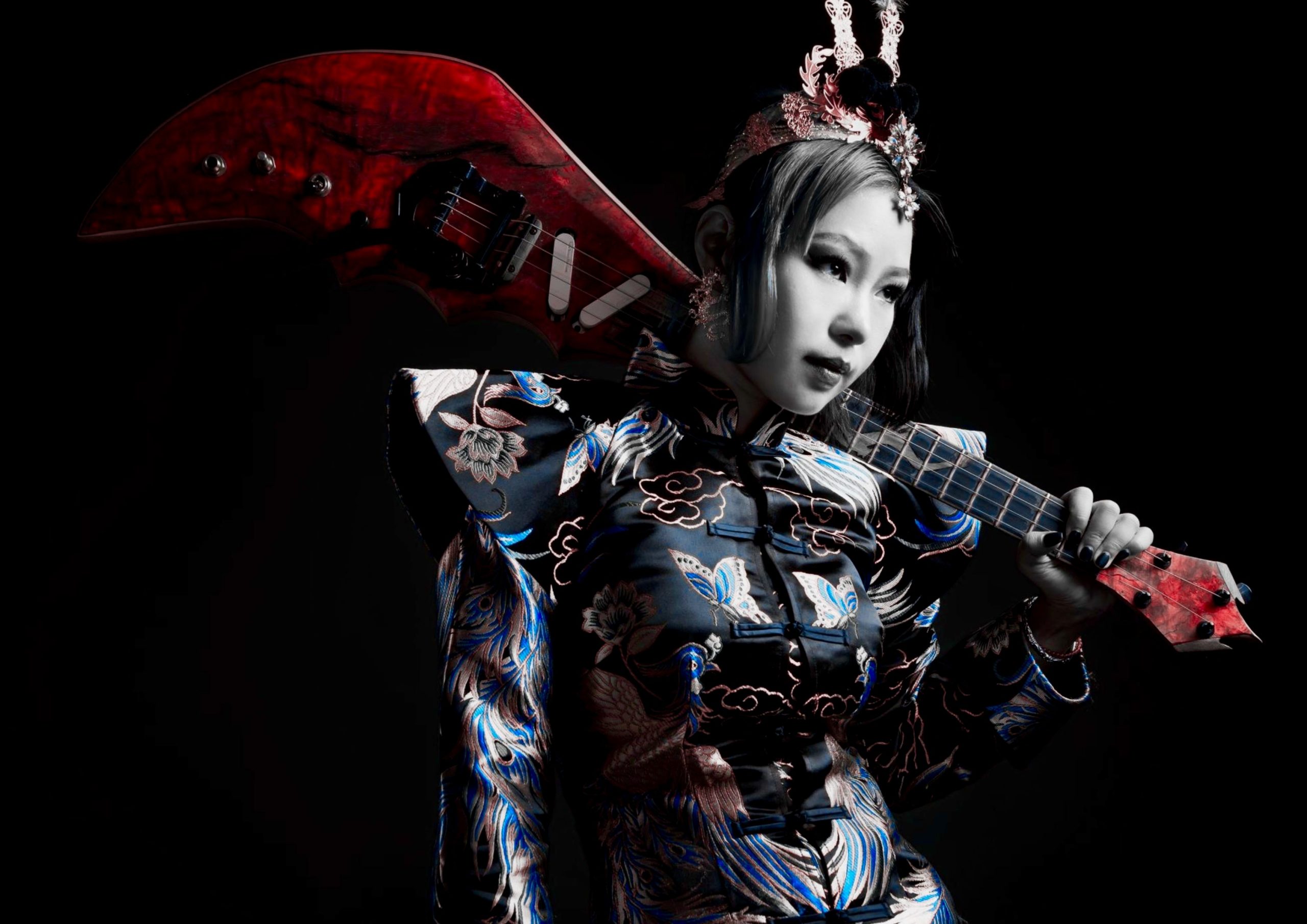
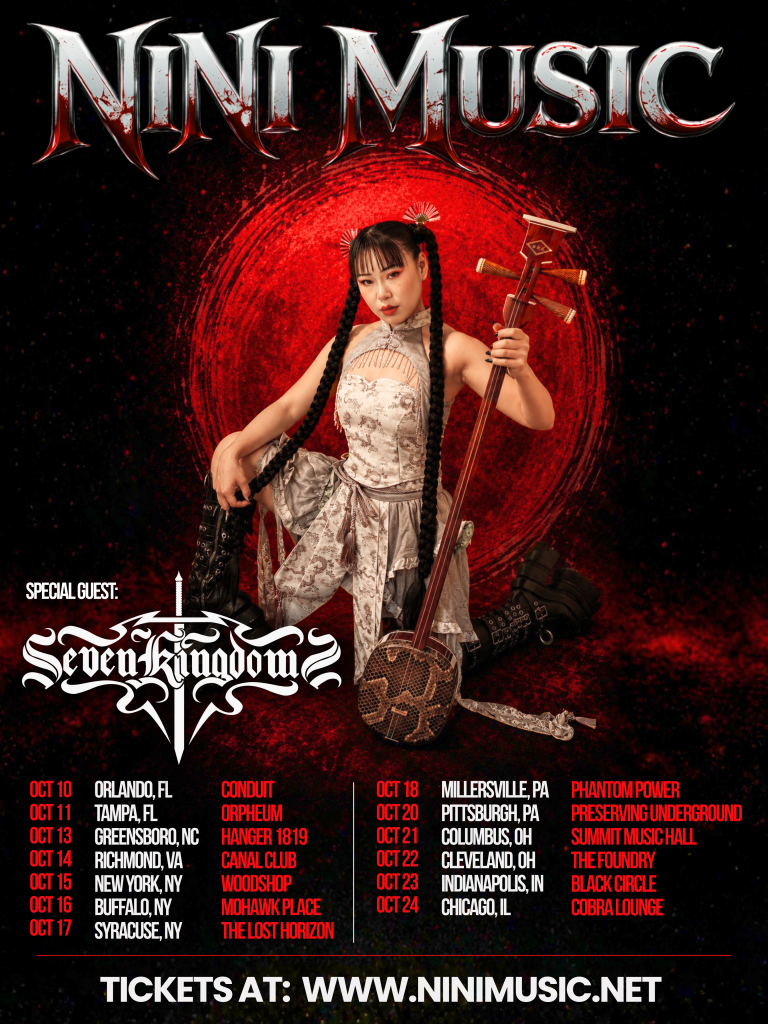
Sometimes, an artist stops you mid-scroll and all it takes is a single video to spark a new fascination. That was the case when I stumbled upon one of NiNi Music’s Instagram reels. In just a few moments, the powerful sound of traditional Chinese instruments colliding with modern metal completely captured my attention.
Curious to discover more, I found myself exploring her performances, learning about the instruments she plays, and understanding the stories woven into each composition. NiNi Music has built an international audience by proving that tradition doesn’t have to remain confined to museums or history books. Instead, it can evolve, inspire, and connect people across cultures.
In this interview, NiNi Music reflects on how the internet transformed her career, the creative freedom of blending ancient instruments with modern genres, the universal language of folk music, and the importance of preserving cultural heritage while embracing innovation.
Many people discovered your music online before seeing you perform live. How has the internet shaped your career?
The internet completely changed my life. I grew up in Taiwan playing traditional Chinese instruments, and if you had told seven-year-old me that one day people from Brazil, Germany, India, and small towns across America would be listening to my music and interested in my culture, I never would have believed you.
For a long time, I was experimenting playing rock and metal on traditional instruments as a street performer. When I started posting videos online, suddenly, people from all over the world started connecting with it. The internet gave me the freedom to share Chinese culture directly with people who otherwise might never have encountered it.
Today, some fans discover me through YouTube, others through TikTok, instagram, facebook or Spotify, and then they come to a live show and experience the stories, instruments, and legends in person.
You combine traditional Chinese instruments with modern genres. What first inspired you to experiment with that fusion?
Traditional music came first. I absolutely fell in love with these instruments as a child, but even while studying at my music conservatory, I always wanted to push the boundaries and ask, “What happens if we break the rules?” My teachers weren’t always thrilled with that idea.
After graduating, I spent years as a full-time street performer, and that’s where the fusion really happened naturally. I started playing rock songs and heavier music on instruments like the sanxian and zhongruan just because it was fun. People would stop and stare because they’d never heard anything like it.
That curiosity from the audience inspired me to keep pushing further until it eventually became the asian folk metal music I make as NiNi Music.
If someone were hearing your music for the first time, which track would you recommend they start with?
I’d probably recommend “Homeland.” More than any other song, it captures the heart of what I want NiNi Music to be. It’s about protecting your roots, your identity, and your culture, while combining traditional Chinese instruments with modern metal. Plus it has a feature from Jayant Bhadula the legendary screamer from the Indian folk metal band Bloodywood.
If someone wants something more cinematic and legendary, I’d also point them toward “Longma” or “Victorious.”
What do you hope people unfamiliar with traditional Chinese music take away from your performances?
I want people to realize that traditional culture isn’t trapped in the past, it’s alive.
A lot of people think of traditional instruments as museum pieces, but they can be just as powerful, emotional, and exciting as electric guitars. My goal has always been to show that these stories and sounds still have a place in the modern world.
If someone leaves one of my concerts wanting to learn more about Chinese history, mythology, or music, then I’ve done my job.
Your music often feels cinematic. Do films or video game soundtracks influence your compositions?
Absolutely. I grew up loving film scores and video game soundtracks. When I write music, I’m rarely thinking about riffs or chord progressions. Instead, I’m imagining scenes and stories: armies crossing mountains, ships sailing through storms, ancient heroes preparing for battle, or legendary creatures emerging from the mist.
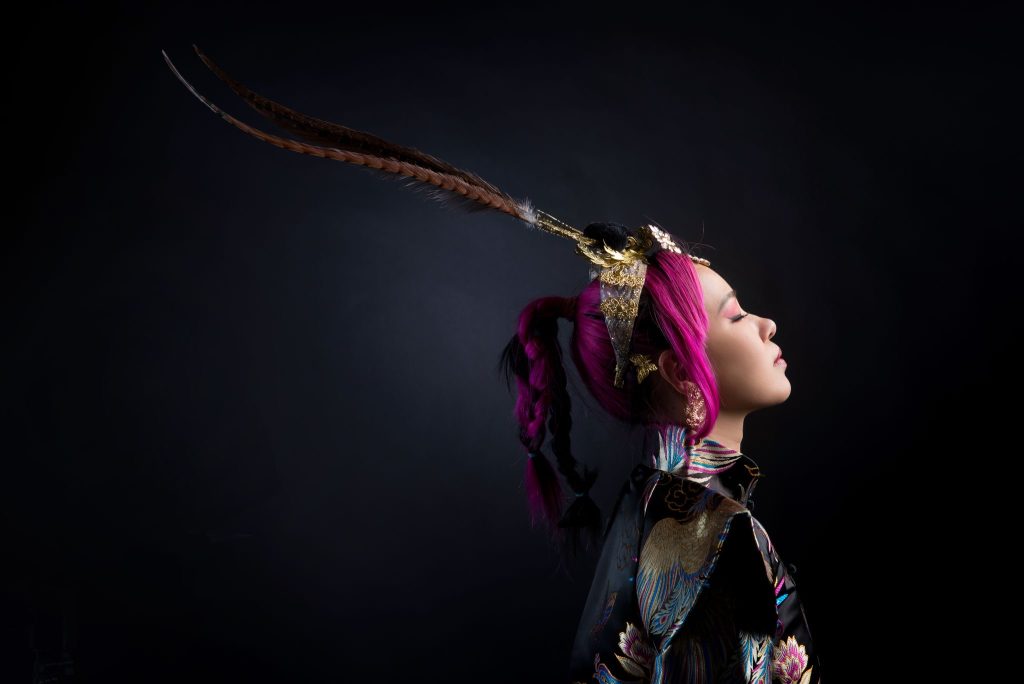
Every song starts as a story in my head before it becomes music.
Your audience spans many different countries. Have fans from different cultures interpreted your music in surprising ways?
Definitely. One of the coolest things about touring is discovering how people connect my music to their own heritage.
I’ve had fans from Eastern Europe tell me that some melodies remind them of their own folk traditions, while fans from India, the Middle East, and Latin America often connect with the energy and storytelling. Even though our cultures are very different, people everywhere seem to understand stories about home, identity, family, and legends.
It’s a reminder that folk music is actually something universal.
Which performance has stayed with you the longest, and what made it unforgettable?
Pol’and’Rock Festival will always stay with me. It was the first European festival my band and I ever played, and standing in front of more than 30,000 people was unlike anything I had experienced before.
The energy was absolutely incredible—massive circle pits, thousands of people sitting on the ground doing Viking rows, and crowdsurfers flying over the audience, all to music inspired by Chinese culture and folk metal. Seeing so many people from completely different backgrounds connect with our music in that way felt surreal.
It was one of those rare moments where you realize that music can transcend language and culture. I’ll never forget looking out into that sea of people and feeling that energy come back to us from the crowd. It was something truly special.
What has been the biggest challenge of introducing traditional instruments to audiences who have never heard them before?
The biggest challenge is often people’s assumptions. Sometimes people see my instruments and think they’re props from a movie or decorations instead of serious musical instruments. My job is to prove that they can be just as expressive and powerful as any guitar or violin.
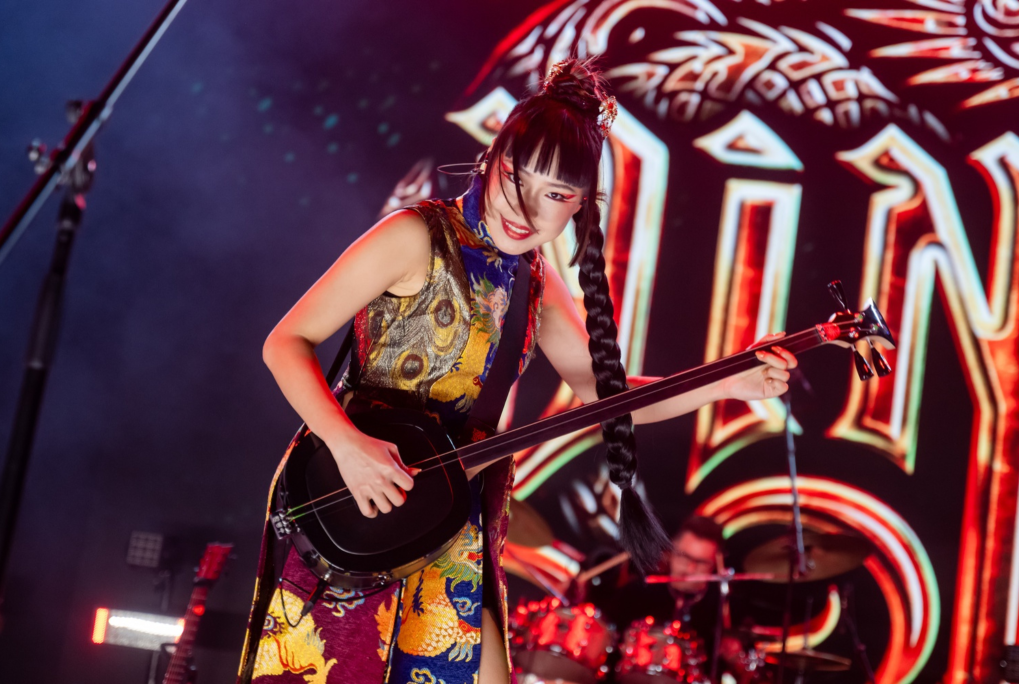
Once people hear them live, though, that skepticism usually disappears pretty quickly.
Technology has made it easier than ever to blend acoustic and electronic sounds. How has it changed your creative process?
Technology allows me to bring ancient sounds into modern spaces.
A thousand years ago, nobody could have imagined plugging a traditional Chinese instrument into distortion pedals, amplifiers, and modern production software. Technology gives me the ability to create sounds that simply weren’t possible before while still preserving the spirit of the instrument.
For me, technology isn’t replacing tradition, it’s helping tradition evolve.
Is there a piece of your own work that you think deserves more attention than it has received?
I’d say “Turn the Tide.” It’s inspired by Zheng Yi Sao, one of the most powerful pirates in history, and it combines Chinese history, folk instruments, and metal in a way that feels very true to what NiNi Music is about.
It’s one of the songs I’m personally most proud of, and the most singing I have done on a track so far. Plus it has my friend from Japan Ryoji Shinomoto (RYUJIN) shredding on guitar and screaming his heart out on it.
Beyond albums and concerts, are there any dream projects you’d still like to pursue?
I’d love to compose music for a fantasy film or a major video game someday. My music has always been rooted in storytelling, so being able to create an entire world through sound would be incredible.
I’d also love to continue to collaborate with traditional musicians from around the world, Chinese, Mongolian, Tribal, Celtic, Middle Eastern, and Nordic musicians all sharing the same stage and telling stories together.
Finally, if you could leave your listeners with one message through your music, what would you want it to be?
Tradition and innovation are not enemies.
The strongest cultures survive because each generation finds a new way to tell the old stories. My hope is that people take pride in where they come from while also having the courage to create something new.
If my music inspires someone to pick up an instrument, learn about their own history, or simply become curious about another culture, then I’ve accomplished my mission.