 By Pedro Baptista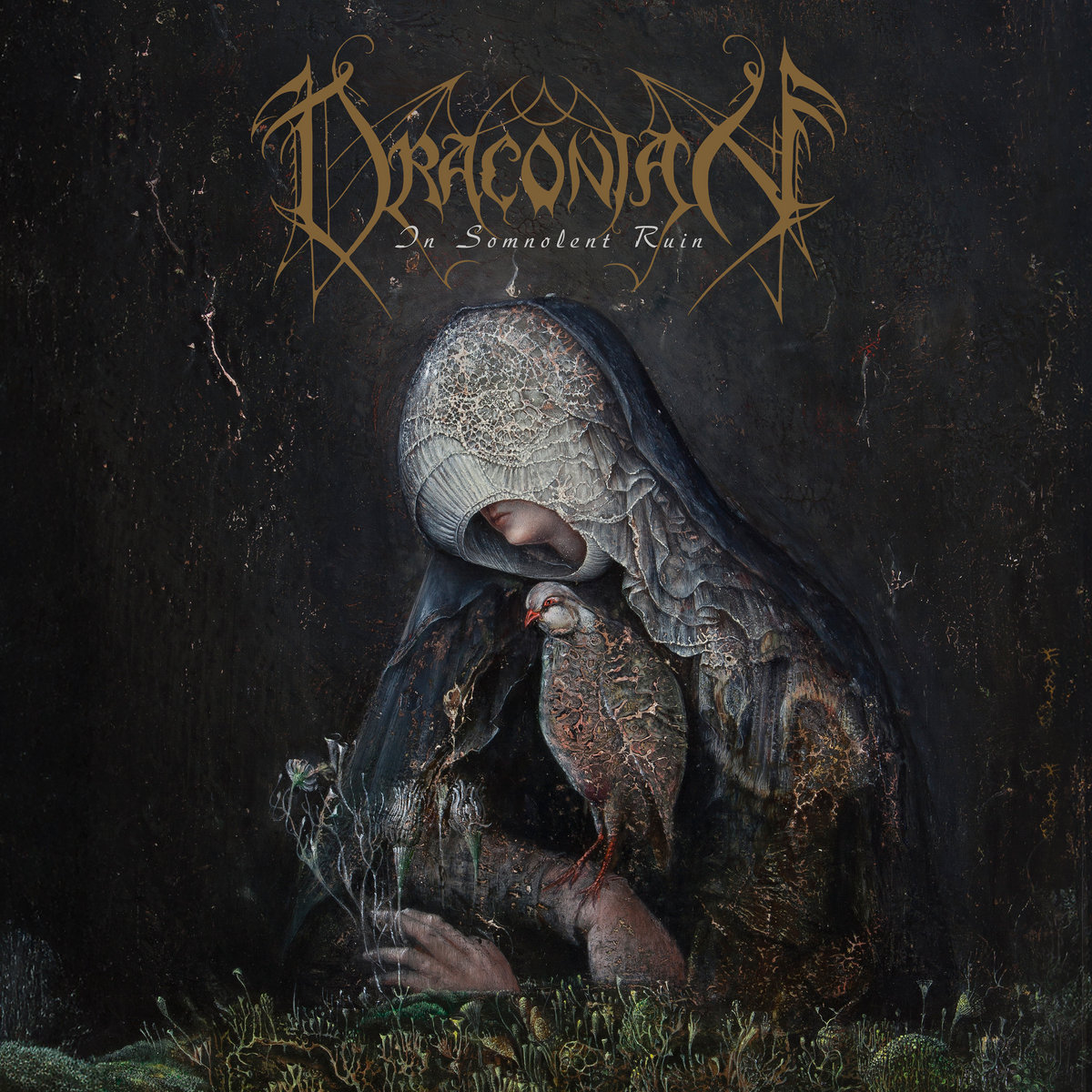
The Return of Form
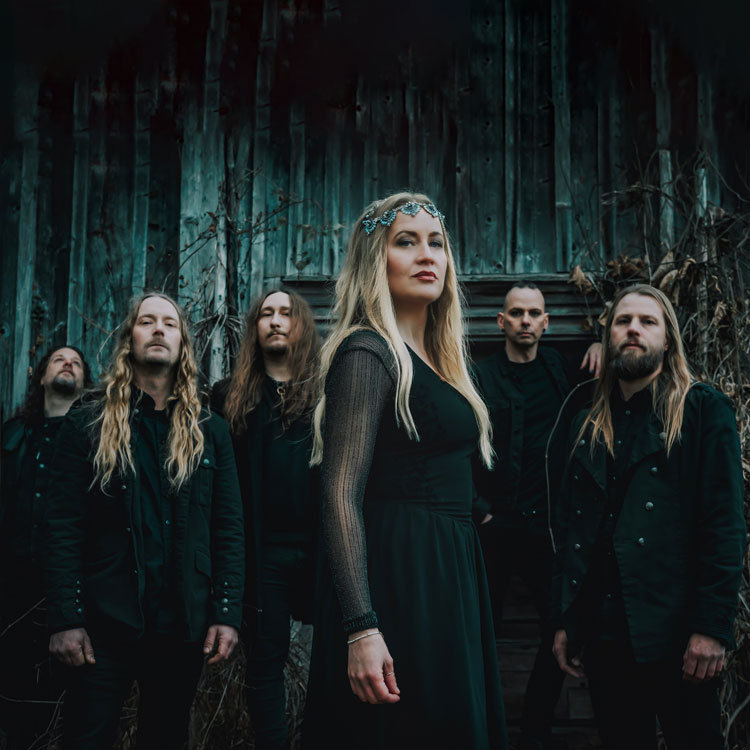
Formed in 1994, Swedish gothic doom metal band Draconian built their sound around the songwriting of guitarist Johan Ericson and the harsh vocals of Anders Jacobsson. Their discography now spans eight albums, yet their core formula has always been rooted in heavy melodic doom, enriched by orchestral textures and the interplay between Anders’ deep growls and a clean female voice. It is the classic “beauty and the beast” formula, if you will.
That female counterpart has always been central to the band’s identity. Lisa Johansson defined their earlier sound before departing. She was replaced by Heike Langhans, whose ethereal and haunting delivery took the band in new directions on Sovran and Under a Godless Veil. Heike’s departure in 2022 brought Lisa back. In Somnolent Ruin is the first fruit of that reunion.
Reacquainting with Identity
After following Draconian for quite a few years, I was very curious to see how the band would evolve with Lisa’s return.
In Somnolent Ruin is both a throwback to older albums like A Rose for the Apocalypse and Turning Season Within, and a platform for new soundscapes. The first half, from the slow and enveloping opener I Welcome Thy Arrow to I Gave You Wings, feels like Draconian rediscovering themselves.
The Monochrome Blade delivers one of the most immediate choruses in their catalogue. Its refrain lodges itself firmly in the mind. Anima, featuring Daniel Anghede, an ex Draconian live member and ISON vocalist, carries echoes of Swallow the Sun in its quieter moments. Then it erupts into classic Draconian heaviness.
The Face of God comes closest to funeral doom. It is slow, deliberate, and almost oppressively heavy. These songs feel like a band reacquainting itself with an older identity. They are full of small tidbits that bring earlier songs to mind, while never becoming clones of them.
The Pivotal Shift
Then Asteria Beneath the Tranquil Sea arrives, and everything changes.
At just two and a half minutes, it is the album’s shortest track by far. It is also its most pivotal. Sung entirely by Lisa, it is quiet and almost fragile. It feels like a woman wrestling with an exhaustion so deep that it has become acceptance.
From this moment, the album transforms both sonically and thematically.
Mythology as Architecture
What follows is one of the most ambitious closing arcs I’ve encountered in doom metal recently.
Asteria is a figure from Greek mythology. She is a Titaness and goddess of falling stars who threw herself into the sea to escape Zeus’s pursuit. Draconian use her not as decoration, but as architecture. The three songs that follow seem to trace her descent with remarkable coherence.
Cold Heavens, the album’s first single, was the last track written for the album, according to Johan Ericson. Its purpose was to “create a simple, straightforward track to balance the album’s longer compositions and add versatility”.
The ending section is one of my highlights of the album. Anders’ delivery just echoes with you for a long time.
And then Misanthrope River begins.
Struggle and Release
Where Cold Heavens is the fall, Misanthrope River is the struggle.
It is the oldest composition on the album, with roots stretching back to the Under a Godless Veil era. It carries a tremolo picked riff akin to those found in post-rock and post-metal, like MONO or pg.lost. Yet it feels earned rather than borrowed.
It is patient and atmospheric, taking its time. A spoken word introduction sets the mythological tone immediately. Anders’ repeated, desperate refrain, “Where shall I go if one of us dies?”, is among the most emotionally raw moments in their discography.
And then, finally, Lethe.
Named after the river of oblivion in Greek mythology, where souls drink to forget before reincarnation, it is the inevitable destination the album has been navigating towards. The earlier references to Gnosticism solidify here. There are Archons, false gods, and souls labelled sinners for seeking hidden truth.
Lisa’s voice carries the weight of arrival. It is the voice of someone who has stopped fighting.
Again, a long instrumental section shines through. Like the previous song, it has a “post” feel to it, and represents Lethe in a way that needs no words. The album mix also shines here, allowing the instruments to breathe and wash over you.
When Anders finally sings, “Oh shooting star / Drown in me / Drink Forget Repeat”, he calls Asteria by her nature. It feels like a river calling a falling star home. The circle closes completely.
A Profound Statement
In Somnolent Ruin is a great album. It was definitely a grower for me, getting better and better with each listen.
The first half is very solid. At times, however, it feels as though it remains rooted in deep Draconian DNA rather than breaking new ground. That tension is arguably what makes the back half hit as hard as it does. It sits between the familiar and the ambitious, between an older identity and possible new directions for the future.
More than 30 years in, Draconian have made an album that rewards patience and repays close listening. Lisa and Anders deliver some of their most considered vocal performances here. They are not just contrasting voices, but characters navigating the same darkness from opposite sides.
Like Lethe, I’ve drowned in it. Drink. Forget. Repeat.