 By Lucia Correia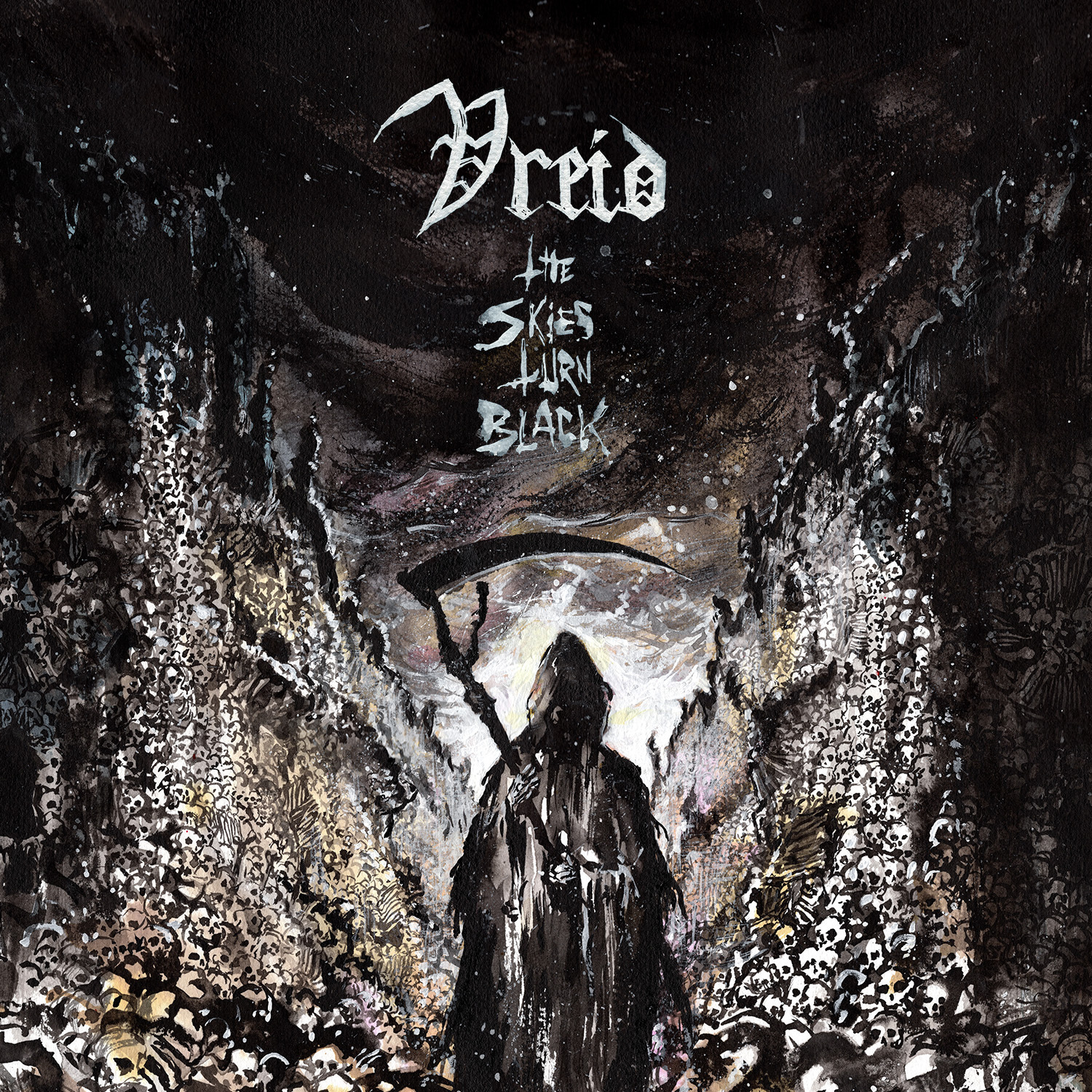
Until recently, I had never properly sat down with Vreid’s music, but one listen to The Skies Turn Black changed that very quickly. What struck me first was how expansive the album feels. It is rooted in black metal and heavy music, but it never feels boxed in by genre. Instead, it moves through atmosphere, melancholy, power, and memory in a way that makes the whole record feel both cohesive and unpredictable.
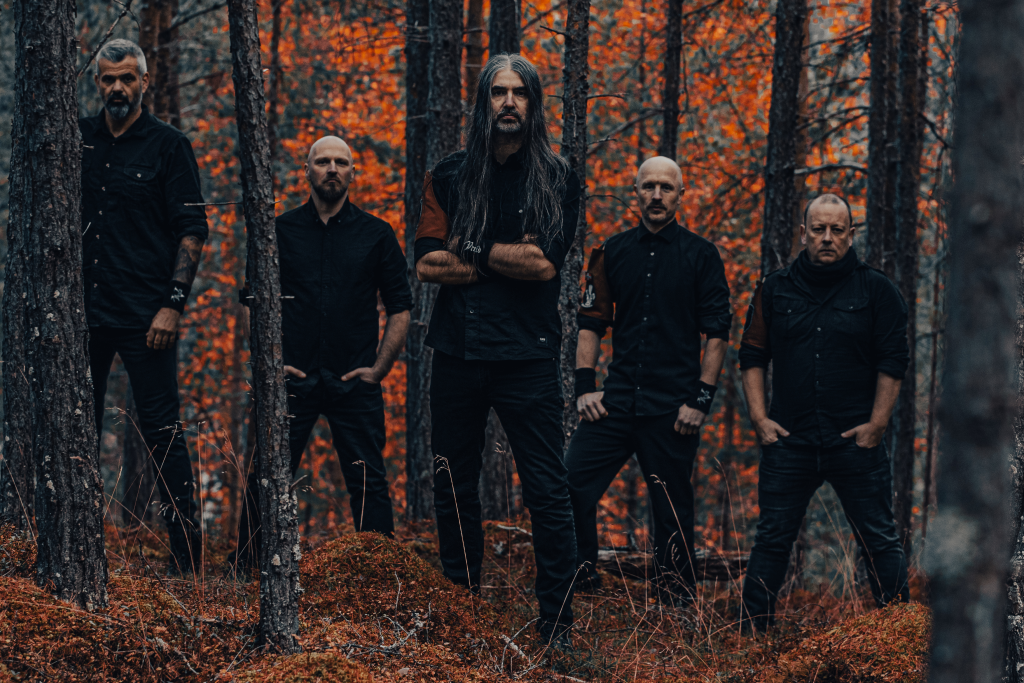
A couple of weeks ago, I sat down with Hváll of Vreid to talk about the long road behind The Skies Turn Black, the band’s creative evolution, the balance between legacy and instinct, and why sometimes the best thing a band can do is step away for a while.
Old Roots, New Corners
Lúcia: First of all, I am going to be honest: I am super nervous! This is my first interview, but I still wanted to talk to you and ask about The Skies Turn Black. It’s an excellent album.
Hváll: No worries. It’s been an album I’ve been working on for five years, and it’s been the longest process I’ve ever had while writing an album. There have been some on-and-off times, but I’m very happy with it. I think it’s the most diverse album we’ve ever done. We’ve always had a mix of elements in our music, from slower, melodic and melancholic material to more aggressive metal, but with this album, we stretched it even further. Some of the slow parts are really low and heavy, while other parts are much more intense. That’s what I’m most happy about, that we were able to find some new little corners.
Lúcia: That really comes through. It feels very coherent, but at the same time, every song has its own identity. I also read that there was a sense of returning to your roots on this album. What can you tell me about that?
Hváll: Maybe for some of the songs, yes. A song like “From These Woods” could have been on one of the early records because it has that kind of feeling. But instead of making eight songs like that, I wanted to take that spirit and push it as far as we could. It was one of those songs I had a very good feeling about early on. There are clearly elements from our very early past, but also a lot of things we’ve never tried before. That mixture is what triggers me.
There is something deeply compelling about the way Vreid approaches heaviness. They are not interested in nostalgia for nostalgia’s sake. Even when the music reaches back towards older roots, it does so with purpose, as part of a wider emotional and sonic landscape rather than a simple repetition of what came before. That is one of the most satisfying things about The Skies Turn Black. It honours the past without sounding trapped in it, and that balance gives the record a real sense of movement.
Tribute, Loss, and the Breaking Point
Lúcia: And what about the title track? I read that it was a dedication to Ozzy. Is that true?
Hváll: Yeah, absolutely. I was pretty much finished with the album, and then I went to the final Black Sabbath show in Birmingham. It was such an amazing day. I felt like a twelve-year-old again. Seeing Ozzy fight through everything, and seeing all the other bands showing their love for him and for what he meant, really reminded me how powerful the whole world of heavy metal is. I sat down the next day, still euphoric from it, and started writing lyrics. Then, just a couple of weeks later, Ozzy passed away, and I sat down for a couple of hours and wrapped up the song. For me, it’s really just a “thank you” to Ozzy and his comrades in Black Sabbath for opening up the whole universe of heavy rock for all of us.
Lúcia: It really does feel like that. I also wanted to ask about something else I came across. Some sources refer to a difficult period during the making of this album, and even a point where the band almost fell apart. What happened?
Hváll: We were ready to start working on a new album, and we had a couple of songs, but when we started rehearsing, I just felt the energy wasn’t there. We were not as a band as we should be. We were struggling to find time to actually work on music together, and I’ve always said that if we come to a stage where we’re not really one hundred per cent in it, then it doesn’t make sense. So I said, let’s just take a break and see what happens. We had a whole year without doing anything together, no rehearsals, nothing. I just kept writing music for myself and thought that if the spirit wasn’t within this band, I could use it for something else. But when we finally met up again and rehearsed, I felt a completely different vibe. I think we just needed a break from everything, and also from each other.
Lúcia: I can understand that. Was there also a part of it that came from not wanting to repeat yourselves, a feeling of asking whether you really wanted to keep doing the same thing in the same format?
Hváll: I think it was a bit of both. I felt that if we were only going to make another couple of standard songs within our genre and put them out because that’s what people expected, then that didn’t really do anything for me. I want blood, sweat, and tears. If you don’t have that, then leave it be. We’ve been playing together for over thirty years, so there are always going to be ups and downs. It was either force something mediocre or wait until we actually felt that we had something we really wanted to do.
There is a real honesty in that answer. Too many bands keep moving out of habit, but Hváll speaks about creativity as something that has to remain alive, urgent, and worth chasing. That attitude explains why The Skies Turn Black feels so alive. It does not sound like a band fulfilling an obligation. It sounds like a band returning because they still had something real to say.
Writing Without Rules
Lúcia: I was also really curious about “Kraken” because it was written as a soundtrack piece. How different was it writing for film compared to writing for an album?
Hváll: The main difference is that when I normally write music, I have no rules and no boundaries. Something can be two minutes or twenty minutes. But with a soundtrack piece, there are limitations. It has to fit a purpose, and you also want people to recognise it immediately. If you make it too layered or too complex, it might not stick. So for me, it became more of a “less-is-more” approach. I wanted the main thing to be clear, and I didn’t want to disturb that too much.
Lúcia: That makes a lot of sense. Sometimes limitations can actually help. On that note, because people often see Vreid as very closely tied to your own creative vision, was there one moment on this album that really challenged you in that sense? A song that was particularly difficult to bring to life?
Hváll: There were a couple, but “Loving the Dead” was definitely one of them. I felt it needed something we didn’t really have in the band. I wanted a different voice, something else, something I hadn’t heard before. I tried a lot of different versions, so I spent a lot of time not just writing the music, but figuring out what the song needed in order to become what I wanted it to be.
Lúcia: And on the other side of that, which song came most naturally? Which one just arrived almost fully formed?
Hváll: I would say the easiest one was the title track, “The Skies Turn Black.” I had a very clear vision for it, and it took only a few hours of work to complete it. I always try to come back to the essence of the song, the main idea I had at the beginning. Sometimes, after a long process, you add too many elements and the core becomes blurry. Then I have to strip things back again. Even when there are many elements, I still believe in that “less-is-more” attitude. What is the essence? What do you want listeners to remember? That’s important to me.
That creative philosophy feels central not only to this record, but to the way Hváll talks about music in general. He is not interested in excess for its own sake. Even in Vreid’s most layered moments, there is still a desire to protect the emotional core of the song. And perhaps that is why the album lands so strongly. It is adventurous, yes, but never directionless. Every song feels like it knows exactly why it exists, and for me, “Loving The Dead” is a great example of that. Whilst not being what one would expect, it’s still Vreid through and through.
Legacy, Instinct, and New Listeners
Lúcia: When I was researching the band, I kept thinking about legacy and where Vreid came from. The history around Windir, and everything that has come since. How do you personally balance honouring that past without letting Vreid become just a nostalgic repetition of it?
Hváll: I try to follow my instincts, my gut feeling, and my passion when I do something. If I want to dive more into a nostalgic vibe on some songs or some albums, then I do it. If I don’t feel it, I go in another direction. I’m not really that conscious of it while I’m creating. It’s more something I can see afterwards. While I’m making music, I try not to focus too much on that. For me, it’s about creating.
Lúcia: If you think back to the early days of playing together, what part of that younger energy do you still carry now? And what, if anything, has changed?
Hváll: I’m older and more grey, I guess. But for me, it’s still the constant chase for that best kind of riff. And it can be anything: a bass riff or a piano line, it doesn’t have to be a guitar riff. It’s that hook, that feeling. That was the main driving force when we started, too. You want to create something that feels special, and when you play it together and feel that it clicks, that’s the chase. Without that chase, I don’t really see the point in what I’m doing. Of course, over a lifetime, you hear a lot of different music and have different experiences, and all of that reflects in the music.
Lúcia: You also mentioned rediscovering music through your children, which I thought was really beautiful. If you had to introduce Vreid to someone younger, someone who had never heard the band before, what song would you choose?
Hváll: From the last album, I think it would be either “The Skies Turn Black” or “From These Woods.” “From These Woods” defines who we are as a band in terms of history and legacy, and if you like that song, I’m pretty sure you’ll find a lot of other things in our catalogue too. But “The Skies Turn Black” is maybe easier to get into. You don’t need to be into the more black metal side of things to connect with it. It’s more about atmosphere and heavy metal in general.
What I found especially interesting here was the idea of rediscovery. Not just rediscovering older music through his children, but rediscovering what makes songs timeless in the first place. That sense of stripping things back to what lasts seems to run through Hváll’s whole creative outlook.
Lúcia: At Teen Art Out, we are always trying to encourage younger people to explore creativity, music, culture, art, all of it. If you had any advice for young people trying to get into music or anything artistic, what would you say to them?
Hváll: Don’t listen to old people like me. Don’t do what everyone else tells you to do. Follow your gut feeling one hundred per cent, even though I know that’s a lot harder than it sounds, especially when you’re young and still figuring things out. But I think gut feeling is something you learn to recognise. Be curious. Check out things that are different. Challenge yourself. Don’t try to do what everyone else does. I think the people who actually dare to stand out and try to find their own thing are the ones on the best path.
Lúcia: And finally, you’re back out on the road again and touring. How excited are you to be doing that?
Hváll: Oh, fantastic. It’s been such a long time since we did a proper full tour. There have been festivals and one-off shows, but now we get to go out for a month, visit so many countries again, and bring these new songs with us. The reception to the new album has been fantastic, so to finally go out there and play these songs live… we’ve been waiting a long time for that. I can’t wait to be back on stage.
Lúcia: Thank you so much for speaking with me today. I really enjoyed the album, and I’m very excited for the tour. Honestly, I hadn’t heard Vreid before this, and now I’m wondering where this band has been all my life. You’ve definitely got a new fan here. Is there anything you’d like to say to the world before we wrap up?
Hváll: I just appreciate that people still want to check out our music and show love for what we do. That’s all I want, really. And I also appreciate that interviews like this can help us reach new people. Of course, I hope the people who’ve followed us for many years still like what we do, but we also always need to find new people who are interested in the music. So I’m really happy to hear that.
Interviewing Hváll felt like speaking to someone who still believes deeply in instinct, craft, and the value of making music only when it truly means something. There is no sense of going through the motions here, and no attempt to chase a version of the band that no longer exists. Instead, Vreid sound reflective, heavy, atmospheric, and fully committed to their own path. If The Skies Turn Black proves anything, it is that some bands do not need to reinvent themselves to stay vital; they simply need to remain honest about why they create in the first place.